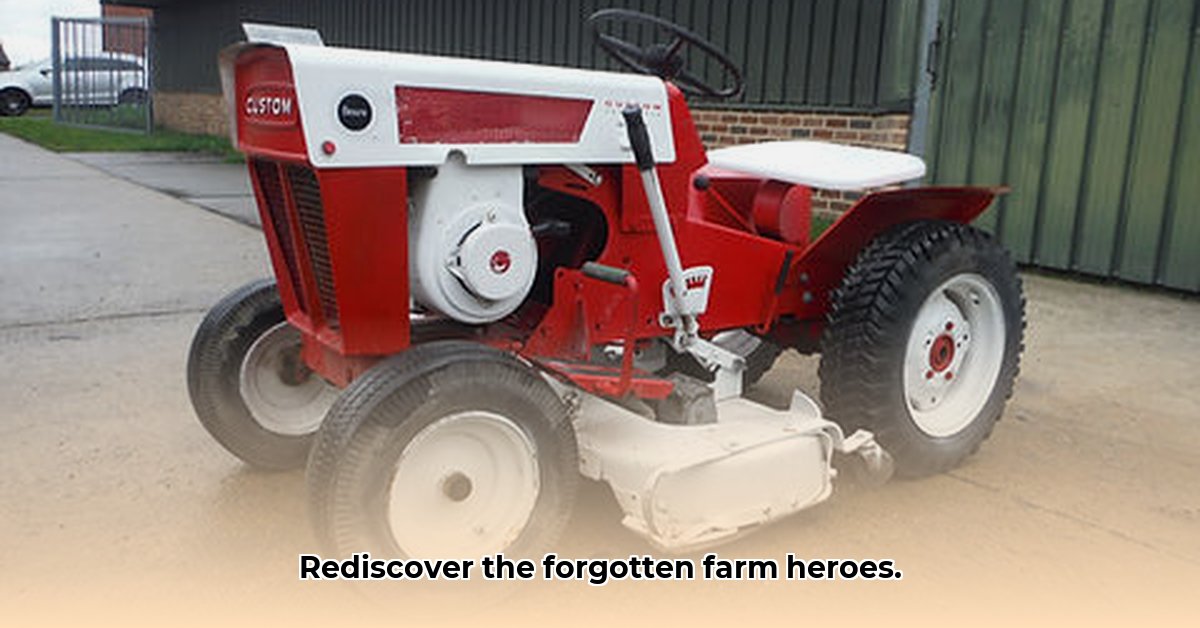
Tractor Sears: The Forgotten Revolution in Farming
Did you know that Sears, Roebuck and Co., the retail giant famous for its mail-order catalogs and affordable household goods, once played a significant role in transforming American agriculture? While largely forgotten today, the story of Sears tractors offers a compelling case study in how a shrewd business strategy revolutionized access to agricultural technology during the early to mid-20th century. Instead of manufacturing tractors themselves, Sears employed a strategic partnership model, collaborating with established manufacturers like International Harvester and the Peru Plow Company. This allowed Sears to leverage its extensive retail network and brand recognition to distribute tractors directly to farmers through its ubiquitous catalog—a revolutionary approach that democratized access to mechanized farming. For more images of vintage Sears tractors, check out this website.
How did this seemingly unexpected venture reshape the agricultural landscape? The answer lies in Sears' understanding of the market's needs. This brilliant approach made owning farm equipment possible for a significantly larger segment of the farming population.
Making Farming Equipment Affordable and Accessible: The Sears Advantage
Sears’ success stemmed from a potent combination of factors. Their mail-order system bypassed geographical limitations, delivering tractors to even the most remote farms, thus overcoming obstacles that had previously hindered access to modern agricultural technology. Crucially, Sears offered these tractors at competitive prices, targeting farmers who couldn't afford the high-end brands of the day. Mechanical farming, previously a luxury for the affluent, became a tangible possibility for small-scale farmers across the nation. This wider access to technology undeniably propelled increases in agricultural efficiency nationwide. But how did this affordability impact the farmers' bottom line? This is a question that warrants further examination.
What were the long-term economic impacts of this increased access? Did it lead to greater profitability for the farmers?
Economic Ups and Downs: How History Shaped Sears Tractors
The economic climate of the 20th century significantly influenced the trajectory of Sears' tractor sales. The Great Depression, while devastating to the economy as a whole, unexpectedly benefited Sears' strategy. The lower cost of Sears tractors provided a lifeline for many farmers struggling to stay afloat. These affordable machines became essential tools for survival during a time of widespread economic hardship. World War II presented a different set of challenges. The war effort created massive resource constraints, affecting the production of all manner of goods, including farm machinery. Despite these limitations, Sears tractors remained a crucial asset, playing a vital role in maintaining agricultural output during this critical period. This period's impact on both sales and the long-term viability of Sears' agricultural arm needs further study.
How did Sears manage its supply chain during the challenging wartime years?
The Lasting Impact of Sears Tractors: More Than Just Machines
Precise sales figures for Sears tractors are difficult to obtain, however, their impact on American agriculture is undeniable. Overlooked in historical accounts favoring more established brands, Sears tractors played a crucial role during a transformative period in agricultural development. These machines provided small farm operations with a path to modernization, potentially boosting productivity and, in turn, farm profitability.
To what extent can Sears be credited with driving adoption of modern farming techniques in the early to mid-20th century?
Beyond the Tractor: A Business Lesson in Accessibility
The Sears tractor story is a powerful illustration of the interplay between business acumen, technological innovation, and societal needs. Sears didn't invent the tractor, yet their strategic distribution and marketing successfully made these machines attainable for a vastly larger population of farmers. Their legacy underscores that technological advancement isn't solely about creating entirely new tools, but also about making existing technology accessible and affordable to a broader audience, thereby accelerating the adoption and benefits of new technologies.
What specific lessons can modern businesses learn from Sears' successful strategy of making innovation accessible?
Uncovering the Full Story: Future Research
Even today, the full story of Sears tractors remains to be fully unearthed. Much additional research is needed to offer a comprehensive perspective on their impact.
Here are several critical areas of focus for future research:
- Precise Sales Figures and Market Share: Determining the exact sales figures and market share held by Sears tractors is crucial for a clearer understanding of their overall impact.
- Comparative Analysis: A direct comparison of Sears tractors to those of competing manufacturers is necessary to evaluate their performance and features.
- Long-Term Economic Impact: Further research should explore the long-term effects of Sears tractors on farm efficiency, yields, and profitability.
- Environmental Considerations: It is important to analyze the environmental consequences of the widespread adoption of tractors at this early stage of their development.
By diligently addressing these research questions, we can gain a richer understanding of this often-overlooked chapter in American agricultural history. The seemingly modest contribution of Sears tractors deserves much more detailed study and appreciation for their profound impact on the nation's farming community.